Showing posts with label Career. Show all posts
“Do you have any questions?”

It’s the moment every potential employee dreads in the job interview. Ask too many and you seem desperate. Ask too few and it’s back to the unemployment line. Equally bad, however, is asking the wrong questions—like these five:

1. Don’t ask: “What are the hours?”
 Employees work long before (and after) they sit in their cubes, according to a study done by Mozy, a provider of data protection and availability. The average guy checks his email at 7:42 a.m. and doesn’t fully stop working until 7:19 p.m., says the study. So by asking about the hours, you’re showing the hiring manager that you only plan on working when you’re behind a desk, which is no longer the norm in today’s constantly connected work world.

Ask this: “What kind of career development programs does your company offer?”
 “It demonstrates that you’re interested in improving your skills and knowledge base,” says Dave Oberstaedt, senior manager of talent management for Nissan. Just because you’re done with school, doesn’t mean you should stop learning. Asking about available extracurricular programs shows that you’re open to learning what the company has to teach you, Oberstaedt says.

2. Don’t ask: “Who’s your competition?”
 Your biggest rule-of-thumb: Don’t ask anything that’s Googleable. Instead, treat your interview like a homework assignment and do plenty of research before you shake your first hand, says Eric Kramer, M.Ed., career consultant and author of Active Interviewing. “The number-one complaint interviewers have with job candidates is they don’t know enough about the company,” he says. In the eyes of employers, a lack of research means you’re not really serious about the position.

Ask this: “What’s the typical career path?”
 You should always try to talk from a career standpoint, says Oberstaedt. Companies spend money on employee orientation and training, so they want to know that you’re staying with them for more than 18 months, he says. Let them know you’re in it for the long haul.

3. Don’t ask: “Do I get time off around the holidays?”
 You didn’t even get the job yet and you’re already counting down the days until a break? Bad move. Focus on showing that you want to contribute to the company as much as you can—not spend time away from it, says Kramer.

Ask this: “Why did you decide to work for this company?”
 The question proves you’re looking for more insight into whether or not the job is right for you. Before extending an offer, employers want to know that you’re confident you’ll mesh with the company both professionally and personally, says Oberstaedt.

4. Don’t ask: “Can I borrow a pen?”
 Three words: Come prepared, man.

Ask this: “Would it be okay if I take notes?”
Bring your résumé, paper, pen, and a business card, advises Kramer. Consider each part an important addition to your interview arsenal. Take plenty of notes so when you write your follow-up letter, you’ll have more than enough info to include, he says. Plus: Before the interview, write down things that you want to remember during the meeting. “In all situations where people become fearful, their thinking collapses,” says Kramer. Know exactly what you want to ask, and jot down any nervous habits that you have: “don’t fidget,” “slow down,” or “eye contact.”

5. Don’t Ask: Nothing!
 A quiet candidate is a boring candidate.

Ask this: Anything but the four questions above
 Don’t wait till the end to ask your questions, says Ford Myers, author of Get the Job You Want, Even When No One’s Hiring. In fact, aim for a 50/50 split: Match each question you receive with one of your own. “This is supposed to be a dialogue, not an interrogation,” says Myers.

via news.menshealth.com
Category: 0 Add comments | | edit post

This year, there are several professions that are making their inaugural appearance on our Jobs Rated Top 10 Best Jobs list. Human Resources Manager , Financial Planner , Occupational Therapist and Online Advertising Manager are all rated as a Top 10 Best Job for the first time due to a combination of high incomes, great environments, good job growth and relatively low unemployment rates.

With the increase in digital computing demands and healthcare needs, it makes sense that most of the professions on our Best Jobs list this year are related to the fields of math, science and healthcare.

1. Software Engineer
Researches, designs, develops and maintains software systems along with hardware development for medical, scientific, and industrial purposes.
Overall Score: 176.00
Income: $88,142.00

2. Actuary
Interprets statistics to determine probabilities of accidents, sickness, and death, and loss of property from theft and natural disasters.
Overall Score: 226.00
Income: $88,202.00

3. Human Resources Manager
Plans, directs, and/or coordinates all human resource activities and staff of an organization.
Overall Score: 281.00
Income: $99,102.00

4. Dental Hygienist
Assists dentists in diagnostic and therapeutic aspects of a group or private dental practice.
Overall Score: 289.00
Income: $68,109.00

5. Financial Planner
Related to careers in portfolio management, the financial planner offers a broad range of services aimed at assisting individuals in managing and planning their financial future.
Overall Score: 300.00
Income: $104,161.00

6. Audiologist
Diagnoses and treats hearing problems by attempting to discover the range, nature, and degree of hearing function.
Overall Score: 311.00
Income: $67,137.00

7. Occupational Therapist
Develops individualized programs of activity for mentally, physically, developmentally and emotionally impaired persons, to aid them in achieving self-reliance.
Overall Score: 318.00
Income: $72,110.00

8. Online Advertising Manager
Plans, directs, or coordinates advertising policies, campaigns and programs online.
Overall Score: 343.00
Income: $87,255.00

9. Computer Systems Analyst
Plans and develops computer systems for businesses and scientific institutions.
Overall Score: 370.00
Income: $78,148.00

10. Mathematician
Applies mathematical theories and formulas to teach or solve problems in a business, educational, or industrial climate.
Overall Score: 392.00
Income: $99,191.00

Read the full article at careercast
Also see: The 10 Worst Jobs of 2012

careercast.com
Category: 0 Add comments | | edit post
Want to get asked out more often? Consider nursing school. Nursing is one of the ten sexiest professions, according to a recent survey.

The seemingly universal male fantasy about the nurse in the short white dress notwithstanding, I can see why nursing, which comes in at number six, made the list. There is something sexy about a person who takes care of you, and nice people (the case for most nurses, in my experience) are sexy.

If you want a sexier job, but can’t handle bedpan duty, there are other options. While they might not be the easiest careers to break into (and some are nearly impossible if you didn’t luck out in the good genes department), they’ll guarantee a role in quite a few people’s fantasies.

1. Entertainer/Model
People in these fields are constantly in the public eye, which requires a great deal of aesthetic upkeep. Their nearly-perfect visages and glamorous lifestyles evoke envy and ignite the fantasies of women and men of all ages. Plus, there’s a certain level of sexiness—think George Clooney or Gisele Bündchen—required of the few who can make a living as entertainers. They don’t call it “movie star looks” or “a model’s body” for nothing.

2. Cocktail Waitress
I take exception with this one. As somebody who’s done it, I don’t find schlepping liquor and beer particularly sexy. My amateur analysis: annoying men voted for this because waitresses are the only women in bars who are nice to them. (Guys: Some inside scoop—the waitresses don’t really think you are charming when heavily intoxicated. They work for tips.)

3. Athlete
Well, yeah, a championship athlete—with the body and spirit to match—is pretty sexy. (There are of course exceptions. Let’s hope that Michael Vick, dog-fighting entrepreneur, isn’t on anyone’s “sexy” list.) There’s something so alluring about the level of stamina required of athletes, not to mention the passion and dedication most of them have for their sports. Striving to better oneself and achieve goals—and building sculpted, strong muscles while doing so—is definitely sexy.

4. Firefighter
When asked what makes firefighters so universally appealing, Carrie Bradshaw on Sex and the City responds, “Well, first of all, there’s a weight limit.” That may be true, but we can’t forget the hero aspect that makes firefighters a common fantasy figure. Firefighters put their lives on the line to help absolute strangers, and sometimes even pets—how many of us could say the same? Their bravery in the face of danger and strength—both emotional and physical—is undeniably attractive.

5. Cowboy
This pick doesn’t seem like too much of a stretch. It’s that image of a mysterious loner riding off into the sunset. Or maybe those surveyed have a thing for cowboy hats and guys on horses guiding cattle. (I know I did after watching Brokeback Mountain.) My only issue: can’t women be cowpeople too? Let’s amend number five to “cowboys and cowgirls.”

6. Nurse
As I said before, I totally get what’s sexy about a nurse. I think I fell in love with all my nurses, male and female, after my children were born. They really seemed to care how I was feeling—and they gave me pain medication!

7. Artist
The fantasy of becoming an artist’s muse is definitely a popular one. Artists are unique, creative, and fiercely passionate about their work. Plus, they tend to be brooding and solitary, making them a bit of an enigma (and challenge)—that’s sexy; no doubt about it. There’s also the added perk of having things created for you if you win an artist’s heart. Sure, dating an auditor might get you some help filing taxes, but somehow it’s not quite the same…

8. Military Professional
This is another one that’s hard to argue. No matter what you think about the war, you have to respect the men and women who are risking their lives for our country. It brings to mind the hero image similar to that of firefighters, cops, and others who dedicate themselves to helping others. The transformed bodies that emerge from vigorous boot camp training don’t hurt the sexy cause, either.

9. Construction Worker
Indeed, there’s something manly about a burly guy with a hammer, especially one who can fix and build things around the house. (Everyone loves taking work home, right?) Humans are attracted to the scent of pheromones that are released while sweating, and construction workers get pretty sweaty lifting and lugging heavy equipment and building materials (as if being good with their hands wasn’t enough of a draw). Granted, the plastic hats detract from the hot factor a bit, but hey, safety can be sexy, too.

10. TV Anchor/Personality
Okay, not all of the blow-dried talking heads on TV are sexy. (Larry King, though a great TV personality, is not exactly the face of sexy.) However, I do like Daryn Kagan, a former CNN anchor. After she lost her on-air gig, she started a company spreading good news via the Internet. CNN’s Anderson Cooper is often referred to as a silver fox—and those piercing blue eyes! And I know many, many women who refer to The Daily Show’s Jon Stewart as one of the sexiest men alive. TV anchors are usually good-looking and well-informed—and nothing is sexier than smarts.

Notice that these jobs have something in common (no, not potentially sexy Halloween costumes)—enthusiasm. To enter into these high-stress, demanding careers, people must really enjoy what they’re doing, whether it’s helping others, making the world a prettier place, or just supplying a drink and lending an ear to an appreciative barfly. Having passion and excitement for what you do—even if it’s not so thrilling or enviable—is definitely sexy.

divinecaroline.com
Category: 0 Add comments | | edit post

Orgy Planner
Today we have a wedding planner or an event planner, but in the old days people saw orgy as a feast that had to be organized irreproachably. The orgy planner had a very unusual but very exciting job – he got to plan festivities for the rich of society and, in some cases, got many perks.

The orgy planner had to organize food, women, music, and accommodation. The downside to the job is that the orgy planner was not liked by all members of society, particularly those who were never invited to orgies and the trade was even banned for a short time. The most popular orgy planner was Gaius Petronius who wrote the satirical book about Roman debauchery called “Satyricon”.

Funeral Clown
A funeral clown had the main job obligation of going to funerals dressed as the dead person. Moreover, he also had to mime his gestures, walking and favorite expressions. During the funeral process, the clown ran all around the coffin together with other clowns in order to make the grieved relatives laugh. In Ancient Rome people thought that this type of ritual could comfort the spirits of the dead and bring joy to the living. There were also famous and very valuable clowns who had the opportunity to mock the emperors at their funeral. Macabre clowns were very well payed, historical sources saying that they gain even better than gladiators.

Whipping boy
They were created because the idea of the divine right of kings, which stated that kings were appointed by God, and implied that no one but the king was worthy of punishing the king’s son. Since the king was rarely around to punish his son when necessary, tutors to the young prince found it extremely difficult to enforce rules or learning.

A whipping boy, was a young boy who was assigned to a young prince and was punished when the prince misbehaved or fell behind in his schooling. The idea of the whipping boys was that seeing a friend being whipped or beaten for something that he had done wrong would be likely to ensure that the prince would not make the same mistake again.Whipping boys were established in the English court during the monarchies of the 15th century and 16th centuries.

Knocker-up
This peculiar job was popular in England and Ireland during the early days of the industrial revolution, before alarm clocks were affordable or reliable. A knocker-up’s job was to rouse sleeping people so they could get to work on time.

The knocker-up used a trucheon or short, heavy stick to knock on the clients’ doors or a long and light stick, often made of bamboo, to reach windows on higher floors. In return, the knocker-up would be paid a few pence a week. The knocker-up would not leave a client’s window until they were assured the client had been awoken.

There were large numbers of people carrying out the job, especially in larger industrial towns such as Manchester. Generally the job was carried out by elderly men and women but sometimes police constables supplemented their pay by performing the task during early morning patrols.

Dog whipper
A dog whipper was a church official charged with removing unruly dogs from a church or church grounds during services.

In some areas of Europe during the 16th to 19th centuries it was not uncommon for household dogs to accompany – or at least follow – their owners to church services. If these animals became disruptive it was the job of the dog whipper to remove them from the church, allowing the service to continue in peace.

In some areas a portion of village land was made available for the use of the dog whipper, the small park named ‘Dog Acre’ in Birchington-on-Sea is the remnant of such a grant.

Some villages employed dog whippers in a more general capacity, dealing with stray and disruptive dogs throughout the village. In this sense dog whippers were precursors of modern animal control officers.

Curse Tablet Writer
A curse tablet or binding spell is a type of curse found throughout the Graeco-Roman world, in which someone would ask the gods to do harm to others. These texts were typically scratched on very thin sheets of lead in tiny letters, then often rolled, folded, or pierced with nails.

The curse tablet writer had sit day in and day out hearing the complaints and woes of his customers who needed curses written. Here is one example: “bind every limb and sinew of Victorius, the charioteer for the Blue team.. the horses he is about to race… blind their eyes so they cannot see and twist their soul and heart so they cannot breathe.”

Tosher
A tosher is someone who scavenges in the sewers, especially in London during the Victorian era. The word tosher was also used to describe the thieves who stripped valuable copper from the hulls of ships moored along the Thames.

The toshers decided to cut out the middle man and it was a common sight in 19th Century Wapping for whole families to whip off a manhole cover and go down into the sewers, where they would find rich pickings.

As most toshers would reek of the sewers, they were not popular with the neighbours. One unexpected side effect of the sewer work was that toshers – or, at least, those toshers who survived – built up a strong tolerance to typhus and the other diseases that swept the ghettos.

Stercorarius
The stercorarius (or `night soil man’, as he was known well into the Fifties in Britain) had regular, if rather more disagreeable, work. We can assume that the average Roman generated about 1.5lbs of bodywaste a day. Imperial Rome, with a population of one million, would therefore generate more than 650 tons of daily sewage. Though we hear of the need for sewercleaners and the risk they ran of choking to death, little of this human waste would disappear down a sewer. Very few Romans were connected up since, in the absence of the S-bend, stench and vermin could find their way from sewer into house and, when the Tiber rose, sewage too (we hear of one house which an octopus nightly entered via the drain to eat the pickled fish stored inside).

But, more importantly, Romans regularly used human excrement to supplement animal manure. Where there’s muck, there’s brass, and it was the job of the stercorarius to empty the cesspits and sell on the contents to farmers on city outskirts. A graffito from Herculaneum records a payment of 11 asses for the removal of ordure (the as being the lowest denomination of coin).

uphaa.com
Category: 0 Add comments | | edit post

In your career, you will inevitably end up saying some dumb or regrettable things to your boss. We all do it to varying degrees at one time or another. The following list of such things is by no means exhaustive, but if you can avoid saying them, you will be doing yourself, your professional persona and your boss a tremendous service.

So, keep these top 10 things to never say to your boss in mind the next time you’re chatting him up by the watercooler.

No.10 “Impossible – that can’t be done.”
This is the kind of shortsighted thinking no boss wants to hear about. It suggests both indifference and a lack of effort. Unless you follow it up with a solution or an alternative, it’s neither proactive nor even helpful to say such a thing.

No.9 “This is the best they could do, huh?”
Whether said in response to new office phones, computers or the banquet hall at a family-style restaurant rented for a Christmas party, this is one of those smart-ass comments that indicates to your boss and to others that you have a deluded sense of entitlement. It also belittles the efforts someone — possibly your boss or even his boss — has made.

No.8 “That’s not my problem.”
Be that as it may, this presupposes the existence of a problem and, more than likely, a frustrated boss or coworker in need of some assistance. At the very least, your boss is looking for someone to take responsibility of the solution to this problem — even if it wasn’t yours to begin with. That means he already knows it’s not your problem, so you can spare him the reminder.

No.7 “That isn’t in my job description.”
In one of the many great courtroom scenes in A Few Good Men, Tom Cruise asks a witness to point out where in the U.S. Marines manual the mess hall is indicated. Naturally it isn’t in there. The point is, a lot of things aren’t detailed in your job description, including e-mailing your friends from work or surfing the web, but you probably do those things anyways, right? So when the boss asks you to do something a little out of the ordinary, don’t take offense, and never say to your boss that it’s not in your job description to do it.

No.6 “Does it really matter if I get this finished?”
A strictly educational environment might promote the idea that there is no such thing as a dumb question, but this isn’t true at the office. To know the difference a good question to ask yourself is: “Will this question waste someone’s time?” No boss wants you to spend an hour doing a project incorrectly, but asking about the relevance of a project is time-wasting and insulting to both of you.

No.5 “That’s a no-brainer.”
As a tired cliché, this statement is offensive enough; however, delivered with just the right patronizing tone, it becomes an insult. Your boss doesn’t hear “no-brainer” as much as he hears, “The answer is obvious — how dumb are you?”

No.4 “We should totally hook up on Facebook.”
No, you shouldn’t. Ever. Your boss knows this and he might be a little disappointed that you don’t. Extending a request like this puts him in an uncomfortable position. He may be too nice to say no, or foolish enough to say yes. Either way, social interactions with your boss should, almost without question, be discouraged. We don’t mean you can’t mingle with him at office parties, but try not to plan weekend getaways with him and his family anytime soon.

No.3 “I got so trashed last night…”
You might just be jawing over the prior evening, but to your boss this could be a hint that you plan to be especially unproductive that day. It might also inform him that you have difficulty keeping your work and private lives separate and that you don’t have much discretion at all. This, in turn, can be a signal that you shouldn’t be trusted with additional responsibilities.

No.2 “I don’t get paid enough for this.”
Ninety-nine percent of the time you’ll be wrong when you say this. Furthermore, such a statement packs so many ready-made responses. Most potent among them might be, “Then quit, and fulfill your great untapped potential elsewhere.” All told, this kind of statement serves no other purpose but to b*tch and complain — which you do not want to do in front of, to or around your boss. Save it for people who might actually think you’re right, like your mother.

No.1 “Sigh”
The passive aggression and frustrating ambiguity of a sigh are what land it at the No. 1 spot. It can be delivered in response to the full range of requests from your boss, and it seems sufficiently open to interpretation to allow you to deny even having sighed at all.

But this is as true to you as it is absurd to your boss. We all know very well what a sigh means: It’s the official theme song of being annoyed and the national anthem of imposition.

mint.com
Category: 0 Add comments | | edit post

1. Totally embarrass yourself.
After the publication of my book Reviving Ophelia, in 1994, I was invited to a prestigious party. I got all dressed up; I was so excited to make connections. I had a wonderful time and was elated as I was walking back to my car. Well, that is, until I felt something on the back of my skirt. While I had gotten dressed for the function, I had apparently sat on a stack of clean laundry, and a pair of underwear had affixed itself. I had spent the entire night that way! I was mortified, but at the end of the day, it just didn’t matter. I went to other similar events after that, and as far as I could tell, that incident didn’t change people’s impression of me one little bit.

I tend to think that we are all always one static-cling mishap away from looking like a total idiot—and believing that helps me keep gaffes in perspective. And, of course, these grand embarrassments eventually loosen their grip anyway, leaving you with an ace-in-the-hole story to crack up your friends with for years to come.

Mary Pipher, Ph.D., has been a psychotherapist for more than 30 years. Her latest book is Seeking Peace ($16, amazon.com).

2. Ruffle people’s feathers.
Years ago, when I began working at a business school, I sat in meetings quietly, afraid I would say the wrong thing. Some people spoke up and were scoffed at. I didn’t want that to happen to me, so I held my tongue. I soon realized that my silence implied that I was on board with whatever was being said. I started voicing my opinion, even on controversial subjects, regardless of how my comments would be received. Occasionally colleagues would roll their eyes, but I found that even those who disagreed with me came to respect me for not backing down. Sometimes my ideas will make me unpopular, sure, but that’s better than being a blank slate.

Mary C. Gentile, Ph.D., is a senior research scholar in business management at Babson College, in Wellesley, Massachusetts. She is the author of Giving Voice to Values ($26, amazon.com).


3. Follow trends blindly.
Looking back on my life, I find it hard to think of a fad I did not embrace. When glam rock glittered, I bleached my hair and wore a dangly earring. When punk rock raged, I donned black leather. Not until my 50s did I find my look—I call it Carnaby Street mod circa 1966—which allowed me to hop off the trend merry-go-round. But I am grateful for this process: It took a fashion odyssey to help me find out who I really am.

Simon Doonan has been the creative director of Barneys New York since 1986. He is the author of Eccentric Glamour ($15, amazon.com).

4. Be willing to fail—doing something you love.
In 1997 I had just graduated from law school (with tons of student-loan debt) and was interviewing for high-paying positions at big firms. The problem was, my heart wasn’t in it. So I took myself out of the running in order to build a small Internet publishing company with a friend. After a year of barely staying afloat, our venture went the way of a 404 ERROR message. I was broke and unemployed, and Sallie Mae was hot on my tail. I wondered what endeavor I should try next.

It sounds crazy, but once again I decided to throw caution to the wind and just do what I wanted. I began working as a trial attorney for the U.S. Department of Justice. Over the next few years, I held a wide array of fascinating jobs that I took because they captured my imagination: serving in the military, reporting from Iraq for the Washington Post, and, most recently, becoming a full-time author. Some might consider me flighty for changing careers so often, but I contend that the key to professional happiness is asking yourself two simple questions every single day: Are you passionate about what you do? And if not, what are you going to do instead?

Bill Murphy Jr. is the author of The Intelligent Entrepreneur ($27.50, amazon.com).

5. Carelessly put yourself at risk.
I’m a terrible skier, and I’m not being hard on myself when I say that. Small children and monkeys are more coordinated than I am. So it was with unbridled terror that I once found myself alone on a black-diamond ski trail in the middle of a blizzard. (Long story.) With nobody to carry me down, I didn’t have a lot of options. So I wept—and had a fairly supplicating talk with God about my imminent death. (I believe I made a series of promises involving church attendance, reduced alcohol intake, and forgoing swearing.) And, finally, I skied—slowly, with zero elegance, and whimpering like an infant the entire time—down the mountain. It wasn’t pretty, but I did it.

The point being, sometimes you have to get in over your head to realize that you’re not really in over your head at all. Two years ago, I got a job that I desperately wanted but had no idea how to do. So I took it, endured several panic attacks, and eventually learned the ropes. My choices were either figure it out or get fired. The bottom line: Most of the time, a high-risk situation won’t kill you, because you are stronger than you think. And it’s never a bad thing to be reminded of that.

Amy Ozols is a cultural commentator and writer for Late Night With Jimmy Fallon.

realsimple.com
Category: 0 Add comments | | edit post

If your spouse helps people or touches them for a living, be careful -- you might be headed for a divorce. Helping professions and hospitality workers have some of the highest divorce rates in the country, according to a comparison of divorce rates among occupations.

The conventional wisdom is that police officers have high divorce rates. But a year-old analysis of the top 15 jobs with the highest divorce rate that recently made the rounds of the Internet doesn't even list police officers among the worst offenders. Based on data from the 2000 U.S. Census, it found that law enforcement workers had a lower divorce rate than the general population.

Before we try to explain why some of these jobs might have high divorce rates, here are the top 15 professions and their divorce rates:

Dancer: 43%
Bartender: 38%
Massage therapist: 38%
Gaming cage: 34%
Extruding machine operator: 32%
Gaming: 31%
Factory: 29%
Phone operator: 29%
Nursing: 28%
Entertainers, sports: 28%
Porter: 28%
Telemarketer: 28%
Waiter: 27%
Roofer: 26%
Maid: 26%

The national divorce rate in 2009 was 10 percent. It's hard to know whether the above jobs are prone to more divorce or whether more unstable people are drawn to those professions. Professional dancers, athletes and entertainers, for example, have more opportunity to cheat on their spouses because they often work away from home and are surrounded by adoring fans. At least that's Tiger Woods' explanation.

Helping professionals, such as massage therapists and nurses, have a high amount of stress and work long hours, spending less time with their families. Hospitality workers, such as waiters, maids, porters and gaming workers, also work irregular hours in high-stress jobs, and come in contact with people on vacation who might be feeling a little randy and have time and money for a tryst on the job.

No matter what the profession, divorces are highest among jobs where workers face high stress and temptations, said Debra Opri, a divorce attorney in Beverly Hills, Calif.. Those temptations include other women, gambling and alcohol, Opri said.

Jobs that require extensive travel, odd hours and are high in stress can lead to divorce because the worker is away from their spouse too much and doesn't know how to deal with the stress away from home, said Ike Vanden Eykel, a Dallas divorce attorney for 37 years, in a telephone interview with AOL Jobs.

Working odd hours and then spending more time with co-workers instead of a spouse isn't the only thing that can lead to divorce, Vanden Eykel said. "One of the biggest causes of divorce is economic pressure," he said.

"When you can't make ends meet, that adds an economic pressure that you can't avoid," he said, adding that even highly paid CEOs who feel pressure at work can have high divorce rates.

Nighttime work can also lead to higher divorce rates, said Richard Fitzgibbons, director of the Institute for Marital Healing, on the Catholic News Agency website. "Those who work in the evenings are a distinct disadvantage," Fitzgibbons said, "because the marital friendship usually suffers, with ensuing significant loneliness."

Some of these jobs also don't pay well, which can lead to more stress in a marriage. Better-educated workers tend to have higher-paying jobs, which can provide less stress in marriages.

jobs.aol.com
Category: 1 Add comments | | edit post
After exploring the world of gorgeous supermodels naked in the Amazon (not the website) with our tour guide Terry Richardson, we came to the conclusion that he has a job that most men would die, or kill, for. Everyone has a vice; it could be women, cars, spirits, ice cream or music, it just depends on the individual. We set out to find the guys who are doing the things we enjoy doing on a regular basis – but they’re getting paid for it. The only thing you need to figure out by yourself is where to sign up.

Terry Richardson – Photographer

You can read all about Terry’s accomplishments and accolades while checking out the Pirelloi 2010 Calendar, but you would gladly sacrifice yourself to be him. As a final parting thought about his job, when was the last time you got to suck on the digits of the Gossip Girls? Just sayin’.

Jonathan Cutler – Brewmaster

Jonathan Cutler (middle) is the Brewmaster for Piece Brewery and Pizzeria in Chicago. Saying that Jonathan is good at his job is like saying Usain Bolt is good at running. Cutler (for his work at Piece) has earned eighteen medals (compared to Bolt’s 16) and also received the World Beer Cup Champion Small Brewery and Brewmaster Award. Jonathan is the grown-up equivalent of the Candy Man – he mixes it with love and makes the world taste good. Not only that, he drinks for free… all the time.

Quentin Tarantino – Director, Actor, Writer, Producer, et al.

Tarantino may be responsible for award winning films like Pulp Fiction, Kill Bill(s), and Inglourious Basterds, but he used to be a lowly clerk in a video store. He managed to turn his passion for film into one of the most successful Hollywood “bootstraps” story – without ever setting foot in a film school. If any of us were to blatantly display our foot fetish in the modern media like he does we would be excommunicated and disowned. With Tarantino it just becomes another part of his genius. Love him or hate him, he gets to do what he loves for a living… and get paid exorbitant sums of money for it.

Derek Spors – Ice Cream Scientologist

You know who Ben & Jerry are, but they didn’t make their boutique ice cream shop the global powerhouse it is all by their lonesome – they had help. Derek Spors was an “ice cream scientologist” whose sole job was the creation of new flavors for Ben & Jerry’s. He was often tasked with going to restaurants and ordering every dessert on the menu, taking trips to trendy new restaurants, and tasting ice cream all day. Sounds like a very horrid existence. Somehow he managed to get his creations into approximately 67% of the homes in America (Ok. The statistic is made-up, but everyone loves Ben & Jerry’s so it HAS to be a big number.) and maintain relative anonymity. Granted, he’s not going to be mauled on the street for autographs, or chased by the pap – but he manages to stay socially connected with LinkedIn and a website without having a picture of himself on the Internet. That, in and of itself, may be more impressive than eating ice cream all day. On second thought, eating ice cream all day sounds pretty damn delicious.

Bill Graham – Concert Promoter

There are only a few jobs that afford you rock star luxuries (fame, fortune, drugs) without the obvious risks (disease, selling out, one-hit-wondering) and being a concert promoter is one of them. Bill Graham just happens to be one of the most famous. He ran both Fillmores and Winterland and rubbed elbows with the likes of the Stones and the Dead. Instead of buying tickets to see a concert at an overcrowded, expensive, dilapidated venue, just call the band up and have them rock YOUR venue – V.I.P. style. Sounds like a pretty sweet gig.

Jeremy Clarkson – Motoring Journalist / Car God

When you’re Jeremy Clarkson every day is casual Friday. You can wear jeans to the office every day because the office is a decommissioned airfield and hangar. Regular journalists may get special access to events or even cool new products to test. Enjoy your new wallet because Bugatti just delivered a Veyron to Clarkson so he could race it against a jet – or a Cessna – or a McLaren F1 – or drive to 253mph. Some say he refuses to drive cars that won’t spontaneously catch on fire, and he hates the smell of hair care products because it overpowers the gasoline smell. All we know is he’s called Jezzer.

Eran Egozy & Alex Rigopulos – Video Game Developers

Eran was a geek interested in music; Alex was a musician interested in geek. They met at MIT in the Media Lab and then founded Harmonix. That is how your Friday night was born and countless millions discovered the music their parents were listening to decades before. Do they have to tell people what to do and rock out with plastic instruments on the conference room table? Yeah, they do, but they also get to play video games all day. Is there anyone that doesn’t want to play video games all day? Now that’s “star power.”

Frank Miller – Artist

Madness? MADNESS?!?!?! This. Is. A. Dream. Joooobbbbbbbbbbb. You’ve seen 300, The Dark Knight, Sin City, and probably seen something inspired by Miller’s film-noir style comics, writing, and graphic novels. He gets to set his own hours, turn down calls from Stan Lee and New Line Cinema, and leverage his words by the thousands when he turns them into pictures and movies. When asked about his inspiration, Miller had this to say – “I like to draw hot chicks, fast cars and cool guys in trench coats. So that’s what I write about.” The autobiographical graphic novel turned screenplay turned film is sure to be epic.

R. Lee Ermey – Sergeant / Gun Nut

Think Jeremy Clarkson except with guns. He transitioned from his role as a Marine Drill Instructor into starring roles in films like Full Metal Jacket and Toy Story. Now he has Lock N’ Load on the History Channel, which is basically an exploration of weapons – both primitive and modern. One week he might be shooting traditional Chinese dynasty rockets; the following he could be testing the M134D 3,000 rounds per minute Mini-Gun. Big guns, big voice, big balls – he’s not a celebrity, he’s a role model. When you fire guns and yell all day you can get away with murder…even if it involved unscrewing someone’s head and shitting down their neck. OOHRAH!

coolmaterial.com

Category: 0 Add comments | | edit post
“Horses are the most gossipy,” says Lisa Greene, a pet psychic from Houston. “They’ll always tell me everything that’s going on in the barn. Snakes usually have a pretty bizarre sense of humor. And rodents like to spell for me.” Recently on the schedule: a reading for a whale.

With pet ownership at an all-time high, and spending on animals increasing steadily despite a recession, the progression from providing our family pets a comfortable goose-down feather bed to wanting to know what is going on in their little heads seems natural.

Although the American Pet Products Association keeps no data about animal psychics specifically, it attributes spending on pets’ well-being during a recession to an increasing humanization of animals. “I think it’s that more people are owning pets, and more people are treating their pets like a part of the family,” says Alison Anderson, an APPA spokesperson. “Products keep getting stranger.”

Americans spent a total of $45.5 billion in 2009 on their animals. That was up 5.4 percent from 2008. Such booming services as massage therapy, antidepressant treatment, and grief counseling account for the increase. An annual study by the APPA noted that “pet services continues to be a growing category as they become more closely modeled after those offered to people.” So it stands to reason, perhaps, that pet communicators who can help us know what our little friends are thinking are a relatively easy find these days.

Greene, who has worked as a pet psychic for just over 10 years, may, in a busy week, receive anywhere from 15 to 40 calls. “Not all the animals want to talk to me,” she says. “I have some animals flip me the paw.” She considers her services a luxury item, with rates of $120 for an hourlong telephone consultation during which she speaks with the owner, who asks her questions to communicate psychically to the animal, and $240 for in-home/in-barn treatment.

And while clients have more typically been women, Greene has noticed a change. Recently cowboys have begun to call her to ask about their horses. “These are good ol’ boys from Texas,” she says. “You wouldn’t think they would call a pet psychic. It changes the way they compete and train.

“The majority of people call because they have a problem,” she says. “They’re not getting along, or [their animals] have a health issue. A lot of times people call because their animals are dying.”

“A lot of it’s curiosity,” says Susan Hoffman Peacock, a dressage instructor and ranch owner in Corona, Calif. “It’s justification for what you’re doing with the animals on a daily basis, and to see if there’s any way you can get more information.” For nearly two decades she has had animal communicator Lydia Hilby visit her barn to tell her what the horses are thinking. “I think most people go with the idea [that] if anything comes out of it, [it] may be useful.”

She remembers Hilby interacting with one horse that had a pinched nerve in its neck, a condition about which, she says, the psychic had no way of knowing. “She said, ‘He said he doesn’t need surgery, and he can, most of the time, feel his right front foot, and he’s fine.’ ” Peacock tells favorite stories about one horse admitting he preferred a purple saddle blanket with gold trim, and another confessing that he had stolen a lollipop from a child.

“I don’t think most people expect a psychic to change everything you do with your horse,” she says. “You’re hoping to get some little piece of information that might help out.”

Read the entire article here.

Category: 1 Add comments | | edit post

1. Man Who Watches Paint Dry

Unless you are a skydiving lion tamer, chances are your job tends to get tedious from time to time. You might even compare it to “watching grass grow” or more commonly “watching paint dry”. For some folks though, such a comparison is downright insulting, seeing as they have made a career out of observing drying paint.

One such person is Keith Jackson from the UK, who for the last 30 years, has been assessing the time it takes for his company’s paint to dry. By gently touching test area on his work station wall, Mr. Jackson times how long it takes for a paint to stop being wet. It might seem horribly unnecessary, but keep in mind that there are places out there which have to occasionally be painted in record fast time (like subway stations or freeways), and it’s up to Mr. Jackson to see just how his company’s formula is holding up.

2. Coconut Safety Engineer

This profession is unfortunately only available in tropical paradises like the Virgin Islands, but luckily it requires very little training or special skills other than the ability to swing a big stick. The job of a coconut safety engineer is to go around to private properties like hotels and resorts and whack their coconut trees until all potentially dangerous nuts fall down.

This is done to protect their guests from falling coconuts (some of which can reach well over 3 pounds in weight) sparing the hotel/resort owners any unnecessary lawsuits. In fact, a falling coconut can do significant damage or even be fatal. The job might not pay that much, and there is no word if a CSE can keep the coconuts he knocks down, but it is a job which concerns itself with the public’s safety, making it quite noble and well worth the effort.

3. Mosquito Gatherer

Malaria, a mosquito transferable disease, is still a huge problem in certain parts of the world, so science is constantly on the job trying to find ways to cure it. In order to do that however, they need mosquito specimens. And that’s when it gets a little weird.

It turns out one of the easiest ways to attract the little disease spreading bloodsuckers is to roll up your sleeves and let them start feasting on the red bloody goodness inside you. That is the job of a mosquito gatherer who turns his own body into an All You Can Eat buffet for mosquitoes. After they latch onto his skin, the mosquito gatherer sucks them up through a straw and deposits the insect vampires into specimen jars for further studies.

The job’s risks include contracting malaria and up to 3000 mosquito bites a day, making it without doubt the suckiest non-prostitution-related profession in the world.

4. Chicken Sexer

This is one of those job titles which could be easily misunderstood, causing less than hilarious mix-ups with certain less than well adjusted individuals. In a sane reality though, a chicken sexer is the person who checks the sex of chicks in poultry sorting facilities.

Today everything is industrialized, even and especially animal farms. What happens there is that a clucking adorable sea of yellow chicks comes down a shaft and onto a conveyor belt or something similar while the factory employees stand around them sorting out the males from the females. The females later go to other farms to lay eggs while any number of things can happen to the males, but most often they get chopped up and put in dog food.

5. Egg Breaker

You might be thinking – “Egg breaker? Hot dog, I’ve been training for that job all my life!” but sadly professional klutzes have been in very low demand in the last few decades and no one is currently interested in paying you to be clumsy. Actually, the job of the egg breaker is to manually separate the egg whites and yolks in food service industries, additionally keeping an eye out for spoiled eggs.

Modern technology can do wondrous things like send communications from one end of the globe to the other in half a second, but we still need humans to separate our eggs, apparently. This is good news for all of you worrying that your job is going to be taken over by robots in the future. Whatever happens, at least you will always be able to find a job breaking eggs.

6. Butt Wiper

Let’s talk about Sumo wrestling. Have you seen how huge those guys are? Flipping hot heck, some Sumo wrestlers get so big you could stab one in the back and not have the knife reach any internal organs for like a week. This is, of course, one of the many sacrifices these wrestlers have to make to achieve fame and glory in the ring, but their size often comes at a much more terrible price: the inability to wipe.

Indeed, a few Sumo wrestlers tend to get so big they no longer can reach down behind and below them to wipe after using the toilet. Not that long ago, this actually was the job of the “freshman” at the school the Sumo wrestler attended, but since finally discovering the concept of basic human dignity, many Japanese officials banned this practice. But there will always be people willing to do many terrifying things for money.

The professional sumo-butt wipers are of course most often hired as full time nurses but the implications of their future tasks are made quite clear in the interview process. Bizarrely, many still take this job willingly.

7. Fart Smeller

Yes, turns out one of the many names kids used to call you back when you were younger is actually a real thing. Incidentally, “Poop Eater” continues not to be a real thing (at the time of this writing), but someday… who knows?

The Fart Smellers have been first described in 2005 in “Popular Science” concerning an experiment performed by Dr. Michael Levitt. Levitt, a gastroenterologist, paid 2 evidently desperate people an undisclosed amount of money to smell and rate farts from his test subjects, according to their noxiousness. The experiment used gasses collected from 16 healthy volunteer after eating pinto beans and concluded that the worst smelling parts of farts are hydrogen sulfide.

Depending on your point of view, you could say every job in fashion is, at its heart, not just a little bit silly. But believe it or not, there are oh-so-many levels of ridiculousity. After reading the news about Rachel Bilson being named Sunglass Hut’s new (and first of its kind) “Eyewear Ambassador”—“I can’t say what makes me a good style adviser for them, but I am a huge sunglasses addict,” she told WWD—we started thinking about other funny and/or odd fashion jobs. They are, of course, presented after the jump!

1. Flatulence Smell-Reduction Underwear Maker: No, really? Yeah, really. According to AOL’s Jobs site, this type of employment demands that workers “create underwear that protect against bad human gas for people who suffer from gastrointestinal problems.” The undies are apparently infused with materials and filters designed to combat bad smells. Guh-ross.

2. Fit Model: A fit model is sort of like a real model, but flies completely under the radar. Basically, if you can boast very specific body measurements that conform to industry standards, you can get paid (well) to stand as still as you possibly can while designers poke pins in the dress they’re trying to fit you with.

3. Nail Polish Namer: Ever wonder how beauty companies come up with catchy names for products (like oh, say, Commander in Chic or Candy Apple Sundae or whatever)? While the job can bounce from the Creative Director’s office to the copy department, or marketing and product development divisions, perhaps you too, can be the one who comes up with goofy product names.

4. Fashion Closet Editor: A ridic job, to be sure, and yet, such an important one. At major fashion magazines where editorial samples are being pushed between stylists, designers and publicists at breakneck speed, this editor’s job is to track each and every item that comes in (and out) of the closet, and to direct an army of interns to help organize and messenger said products. Why do we have the feeling this job is not as glamorous as it sounds?

5. Trend Forecaster: There is a very select group of hipsters in L.A. and New York who get paid by huge companies to scout out “trends”—what the kids are doing on the street—and report back. The job entails being about 10 steps ahead of the Urban Outfitters and American Apparels of the world (in fact, they employ them in the first place), and traveling the world to snap photos and collect notes on what will be the next big thing. Ridiculous? Sure. Awesome? Totally.

thefrisky.com
Category: 0 Add comments | | edit post
There are some conversations that don't belong in the workplace. Staying away from discussing the following topics will make your work life a lot easier.

1. Religion
You shouldn't discuss your religious beliefs or your thoughts about other religious beliefs at work. Religion is a very personal issue and people are very sensitive about it. They don't want to hear that you disagree with their religious beliefs or that you believe your religion is the one in which everyone should believe.

2. Politics
This is another sensitive issue, particularly around election time. While you may feel very strongly about your political party or candidate, or have negative views about the opposition, you should not try to win your co-workers over to your point of view.

3. Your Sex Life
Why shouldn't you talk about your sex life? Simply because it's no one's business other than yours and your partner's. Other than that, it makes people uncomfortable. Taken to the extreme, it may even border on sexual harassment.

4. Problems With Your Spouse, Your Children, or Your Parents
When you discuss problems you are having with others, your co-workers and your boss may wonder if those problems are distracting you from doing your job. Talking about your problems with your family will reveal your weaknesses. You don't want to do this, especially if you are in a position of authority.

5. Your Career Aspirations
Talking about how you want to move on to something bigger and better will certainly, for good reason, make your boss and co-workers question your loyalty to your current job. If you are interested in moving up within your current organization, your actions will speak louder than words. Do your job exceptionally well, and of course, let your boss know you want to move up, but don't make it the topic of workplace conversations with anyone who will listen.

6. Your Health Problems
Don't dwell on your health problems at work. If you do, you will give your co-workers and boss reason to wonder if an illness will keep you from doing your job. Of course, serious health issues that will cause you to take time off, must be discussed with your employer. No one, however, needs specific details about your health.

careerplanning.about.com
Category: 5 Add comments | | edit post
The next time you are tempted to complain about your job, spare a thought for this guy.

Ramesh Sahu works in the sanitation department of Calcutta, cleaning out the city's sewers.

Thousands of people are employed in the sanitation department through non government agencies.

Despite a rise in the number of deaths of manhole workers every year, workers regularly go into the manholes without any protective gear.

As a result of this, many of them contract deadly diseases and die of unnatural causes.

Deadly gases such as carbon monoxide, hydrogen sulphide and methane can build up in the sewers, not to mention harsh chemicals used in homes and industry.

Government guidelines say that sewer workers must be equipped with protective gear, including helmets, gloves, goggles and instruments to check for poisonous gases. But, clearly, not all contractors follow these guidelines.

telegraph, UK
Category: 4 Add comments | | edit post
Roll out of bed and up to your computer. There, that’s your commute. Sound good to you?

Now that so many jobs only require an Internet connection and maybe a phone line, earning a real salary while working in your fuzzy slippers is not only possible, it’s common. Here are ten well-paying work-at-home jobs you might want to check out.

1. Web Software Engineer
Designing and building computer applications can be done entirely from home with web access and a fast workstation. Many software companies operate entirely through telecommuting, which saves on office overhead and expands their employee pool globally.

2. Public Relations Specialist
Most public relations duties are handled primarily over the phone and through email. Writing press releases and managing media contacts can easily be done from home. Some PR firms allow associates to telecommute, or you can open your own freelance PR business in your home.

3. Sales Executive
Companies are always looking for sales people to make cold calls and generate new sales leads. Some training is usually provided.

4. Computer Systems Analyst
Designing and maintaining office computer systems can be done remotely using virtual private network (VPN) and virtual desktops. Outsourcing IT to home-based specialists is gaining popularity.

5. Database Manager
All you need to maintain a database is a computer and an Internet connection. Database managers can be salaried employees or work as freelancers.

6. Web Design Pro
Designing and building web sites from home has been done since the advent of the Internet. A web designer with a solid portfolio can work as a freelancer or contract with a web design firm.

7. Graphic Designer
Graphic designers use a combination of visual creativity and computer publishing tools to provide both print and online communication solutions. These can be staff or freelance positions.

8. Paralegal (Legal Assistant)
Paralegals assist law firms by researching cases and delivering other legal services. Telecommuting paralegals are becoming more popular as they provide cost savings for firms. Demand for paralegals is expected to grow faster than average over the next five years.

9. Medical Transcriptionist and Medical Claims Processor
Two very different jobs, both transcriptionists and claims processors require specialized training. Transcriptionists convert dictated material into text form. Claims processors encode and coordinate patient health care information to get claims paid by insurance carriers.

10. Travel Agent
Making travel arrangements for customers can easily be done from home. Home-based travel agents can freelance or sign up with an agency.

mainstreet.com
Category: 0 Add comments | | edit post
W. Neil Berret presented his boss a resignation letter in a form of a cake. The letter was written in frosting on a full sheet size cake. The cake was delicious and it was well received.

"Dear Mr. Bowers,

During the past three years, my tenure at the Hunters Point Naval Shipyard has been nothing short of pure excitement, joy and whim.


However, I have decided to spend more time with my family and attend to health issues that have recently arisen. I am proud to have been part of such an outstanding team and I wish this organization only the finest in future endeavors.


Please accept this cake as notification that I am leaving my position with NWT on March 27.


Sincerely,
W. Neil berrett"


Workers have a slew of crazy excuses for being late to work, and “I got locked in my car trunk by my son” tops CareerBuilder most recent survey of over 8,000 workers.

According to the survey, 20 percent of workers arrive late to work at least once a week, up from 15 percent in last year’s survey. One in ten (12 percent) said they are late at least twice a week.

The most popular “standard” reasons for running late are due to traffic (33 percent); lack of sleep (24 percent); and getting the kids ready for school or day care (10 percent). Public transportation woes, wardrobe issues (not of the Janet Jackson-malfunction kind), and dealing with pets are also common reasons.

But mixed in with those “common” reasons are those that are, well, a bit more odd.

The most outrageous reasons for being late to work:

- “My husband thinks it’s funny to hide my car keys before he goes to work.”
- “I was attacked by a raccoon and had to stop by the hospital to make sure it wasn’t rabid.” Lefty
- “My left turn signal was out so I had to make all right turns to get to work.”
- “A gurney fell out of an ambulance and delayed traffic.”
- “I feel like I’m in everyone’s way if I show up on time.”
- “My heat was shut off so I had to stay home to keep my snake warm.”
- “My father didn’t wake me up.”
- “A groundhog bit my bike tire and made it flat.”
- “I walked into a spider web on the way out the door and couldn’t find the spider, so I had to go inside and shower again.”
- “I got locked in my trunk by my son.”
- “My driveway washed away in the rain last night.”
- “I had to go to bingo.”

Read more on careerbuilder.com
Category: 0 Add comments | | edit post
Who do you think has the most dangerous job in the world? Could it be the window washer, who dangles dozens of stories above the concrete? Perhaps it's the circus lion tamer, who regularly sticks his head in the mouths of roaring animals?

In general, occupational injuries claim the lives of 15 workers a day die, according to the AFL-CIO. However, it's these eight types of workers who most frequently put their lives on the line.

1. Fishermen
Men and women who work in the fishing industry regularly put their lives at risk, battling forces of nature, including treacherous storms and extreme temperatures. In addition, many fishermen, proud of their reputation for being independent spirits, sometimes make the risky decision to buck safety regulations.

2. Pilots and airline employees
The number of fatalities for airline employees was particularly high in 2006 due to an August 2006 Comair crash in Lexington, Kentucky, that killed 47 people, including the pilot and multiple passengers. However, the BLS (Bureau of Labor Statistics) reports that there were 215 airline-related fatalities all together, including 44 accidents that involved multiple deaths.

3. Loggers
People who work in the logging industry face the expected dangers associated with cutting down giant trees. Not surprisingly, the cause of death listed most commonly is "struck by object." According to the Occupational Safety and Health Association (OSHA), one of the most dangerous situations is a lodged or hung tree, which happens when a cut tree doesn't fall all the way to the ground but gets caught against another tree.

4. Structural construction workers
These are the people you see hoisting those giant steel beams to create the structural framework of office buildings and other large projects. The United Steelworkers union claims that deaths among structural construction workers are increasing as owners and managers try to cut costs. The most common cause of death among them, according to the BLS, is falling.

5. Waste management employees
Because waste and recycling collectors often ride on and/or drive the trucks, their biggest threat involves road and highway crashes. The frequency of contact with hazardous wastes is an additional risk.

6. Farmers and ranchers
While it may not seem like a dangerous occupation at first, farmers and ranchers often use heavy equipment to do their jobs. Large machinery can easily crush people, and vehicles, such as tractors and backhoes, have overturned or run over farm employees.

7.Power-line technicians
More than 350 workers, including those who install or repair lines, are killed annually due to contact with electric currents or power lines, BLS reports. Other incidents have been caused by employees who fell while working on power lines high above the ground. Fatalities have risen recently among electricians.

8. Roofers
The BLS notes that fatal falls from roofs increased by 15 percent between 2005 and 2006. Including falls from ladders, scaffolding, and other places, falls were the second most common cause of worker fatalities, after driving accidents.

Do you know another dangerous job? Your ideas and comments are welcomed :)

Category: 5 Add comments | | edit post

When LEGO employees get a business card like this, they even try to match the look of the minifig (gender, hair, glasses) to the person.

It’s a brilliant way for LEGO to use their brand and to create some happiness along the way.

However, only a few LEGO employees get these - they’re expensive to make so only a few executives and people in PR roles get them.

What does your business card look like? Is it fun, surprising and memorable… or is it just like all the other ones out there.

If you need some business card inspiration, here are 51 very creative business cards.

positivesharing.com
Category: 2 Add comments | | edit post
A 2008 CareerBuilder.com survey of close to 9,000 workers determined that those born under Scorpio, Leo, Taurus, and or Cancer are the most likely to earn over $100,000 per year. Sorry Capricorn and Aquarius, you folks are most likely to earn under $35,000 per year. We won’t all be rich, but we can find satisfaction in our jobs, especially if we seek out ones that are congruent with our zodiac signs.


Aries

CHARACTERS: Strong (and strong-willed), vibrant, enthusiastic, brave, and competitive.
BEST JOBS: police officers and firefighters, excellent promoters, entrepreneur, soldier, rescue worker; work well in the fields of government and politics, television, and recreation.

Taurus
CHARACTERS: enjoy stability, will work very hard for certain guarantees—good benefits, vacation time, salary, job security, determined, patient, honest, and methodical, excellent team members, dependable, love beautiful things and love working with flowers, food, jewelry, and luxury items, have clear and strong voice.
BEST JOBS: announcer, public speaker, or receptionist, accountant, educator, engineer, lawyer, designer, landscaper, chef.

Gemini
CHARACTERS: like fast-paced, pressured environments, won’t survive long doing tedious or repetitive work, optimistic and full of energy, and love to express themselves.
BEST JOBS: stockbroker, switchboard operator, technical support, teacher, architect, machine operator, rescue worker.

Cancer
CHARACTERS: sensitive, so they do well in jobs that require nurturing or taking care of things, good at multi-tasking, can give great advice and are very protective, responsible, and imaginative problem solvers.
BEST JOBS: gardener, social worker, childcare, human resources, lawyer, teacher, CEO, soldier.

Leo
CHARACTERS: fearless, inspiring, and independent, work best when they are in the spotlight and love jobs that bring status and power, high-maintenance and disruptive to a team environment, possess spontaneity and ingenuity, and do well when encouraged to lead.
BEST JOBS: CEO, performer, tour guide, real estate agent, interior decorator, fashion designer, government, saleperson.

Virgo
CHARACTERS: perfectionist, do well in detailed-oriented professions, remember things, good at abstract thinking, tidy, do well in service-type jobs, and easy to get along with.
BEST JOBS: editor/writer, teacher, critic, technician, translator, detective, statistician.

Libra
CHARACTERS: good-looking and charming, gracious and entertaining, cooperative, people people.
BEST JOBS: diplomat, dancer, salesperson, host, negotiator, travel agent, supervisor.

Scorpio
CHARACTERS: able to block out distractions, concentrate, and focus like a laser beam, curious, intimidating, intuitive, and like to know what makes things tick.
BEST JOBS: detective, lawyer, educator, scientist, surgeon, physicist.

Sagittarius
CHARACTERS: ethical, full of energy, and rather philosophical, excellent decision-makers, spiritual, love to travel and be outdoors, outgoing and fun-loving, likable and witty coworkers, not bothered with the little details, and hate routines.
BEST JOBS: minister, animal trainer, editor, public relations, coach, and anything having to do with travel.

Capricorn
CHARACTERS: ambitious, love challenges, determined and persistent, responsible and conscientious, work to standards, and workaholics.
BEST JOBS: manager, administrator, editor, banker, IT, and anything science-related.

Aquarius
CHARACTERS: have humanitarian nature, love to explore avant-garde ideas and have a curious and adventurous nature, rebel against corporate environments, need freedom of thought and movement.
BEST JOBS: scientist (if they can explore new theories), inventor, organic farmer, aviator, designer, musician.

Pisces
CHARACTERS: creative and passionate, excel at traditional arts, and highly intuitive.
BEST JOBS: artist, nurse, physical therapist, philanthropist, veterinarian, psychologist.

If you are just starting out in the working work or looking to change careers, you don’t need to take a test or consult a career professional—just look to the stars.

Category: 6 Add comments | | edit post
Maybe you don't want to spend all that time taking classes in obscure subjects while hoping to find your calling and piling up student loan debt. Maybe you don't really care so much about college. You just want to work and make money.

You can do it.

No test can tell an employer how good you might be at some of these lines of work -- real estate broker or fashion designer, for example. That's why a degree is less important to a potential employer than field experience and demonstrated past success. Either you're good at it or you're not.

Here are jobs that can earn more than $100,000 without college:

1. Real Estate Broker

90th Percentile Income: $187,000
75th Percentile Income: $151,000

Only two jobs on this list have a six-figure median wage. This is one of them. Although you have to get a license, you need only be a high school graduate and at least 18 years old to apply for one, and you have to pass a written test. Expect to work evenings and weekends. Competing for clients with more experienced and established brokers won't be easy either. The economy isn't the best for brokers now, but as it bounces back, there may be great opportunities.

2. Air Traffic Controller

90th Percentile Income: $186,000
75th Percentile Income: $156,000

This and real estate broker are the only two jobs on this list with a six-figure median wage. Stress abounds. Just getting in the door requires drug screening, background checks, medical exams, attending a Federal Aviation Administration-approved education program and a pre-employment test. Once you've got the job, the benefits and pay are both healthy.

3. Small Business Owner/Operator

90th Percentile Income: $167,000
75th Percentile Income: $119,000

Casual dress, flexible hours and unlimited use of the company car make this a potentially very sweet deal. Expect to use every skill you have and develop a few along the way. Customer service, graphic design, sales, finance and leadership are just the entry-level survival skills of the commercial jungle.

4. Fashion Designer

90th Percentile Income: $141,000
75th Percentile Income: $104,000

If this is your cut, you should probably move to New York or California. These jobs are geographically concentrated and nearly one-fourth are self-employed. It's a very competitive field. The popularity and glamour of design attracts many, and a two-year degree definitely helps. Employers also want designers with knowledge in textile fabrics, ornamentation and fashion trends.

5. Plumber, Pipe Fitter or Steamfitter

90th Percentile Income: $130,000
75th Percentile Income: $94,500

One of the largest and most well-paid pursuits in construction. The training you need can come from an apprenticeship, tech school or community college, and not all states require licensing. If you want to make that six-figure wage, expect to work late, as the job often falls short of $100,000 before overtime. Get a good reputation, and maybe a little skill in welding, and the jobs should start pouring in.

Click here to see the full list of Jobs That Can Earn More Than $100,000 Without College.

Category: 0 Add comments | | edit post

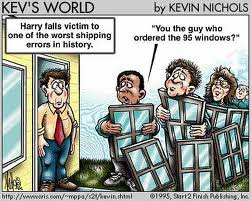
Funny cartoon of the day

Funny cartoon of the day